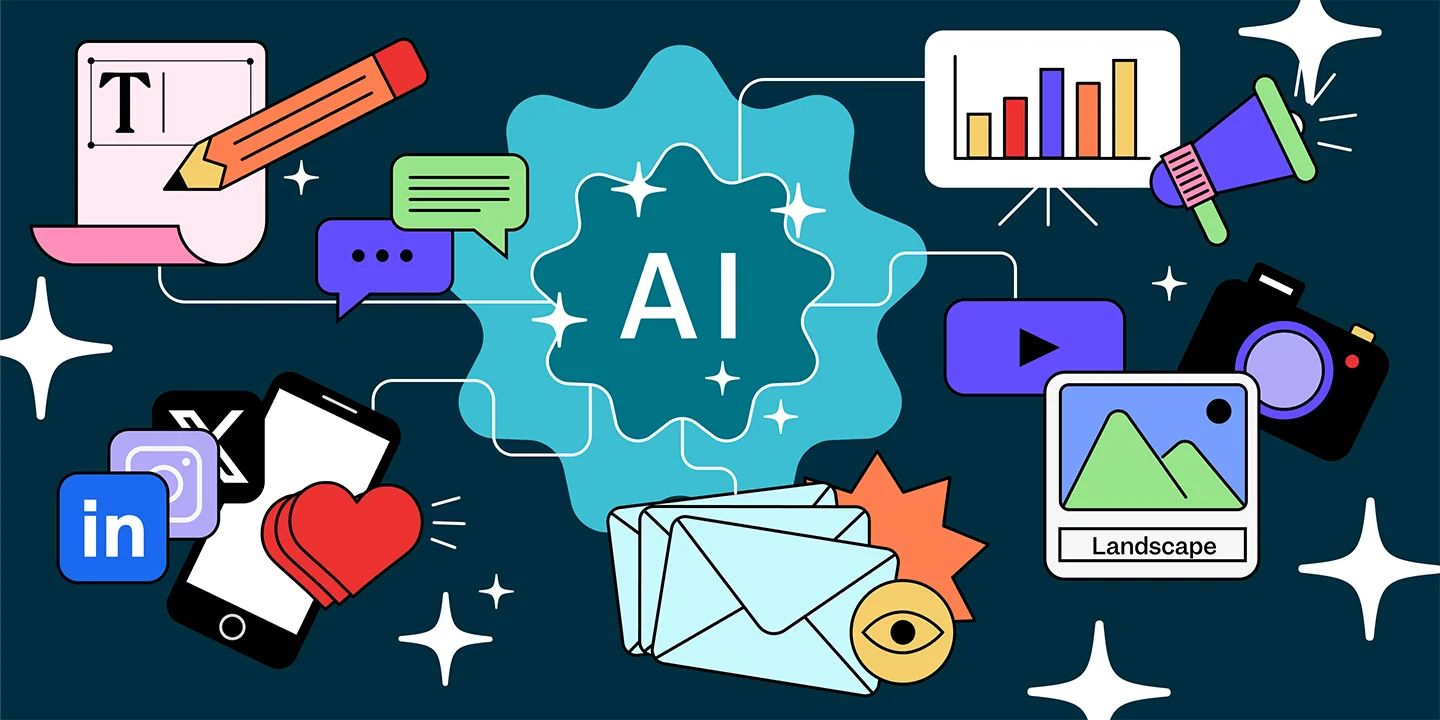
In an era where customer attention is one of the most contested commodities, marketers are increasingly turning to artificial intelligence (AI) to improve performance, personalize experiences, and, ultimately, drive higher conversion rates. Modern AI marketing tools use machine learning, predictive analytics, natural language processing, and automation to optimize strategies in real time — far beyond what manual analysis and guesswork can achieve.
In this guide, we’ll explore how AI marketing tools improve conversion rates, the categories of tools available, leading platforms worth considering, and practical strategies for implementation. Whether you’re a seasoned marketer or a business owner building your first digital strategy, understanding how to apply AI effectively can give you a competitive advantage.
What “Conversion” Means in AI Marketing
Before diving into tools, it’s important to clarify what we mean by “conversion.”
Conversion refers to the action you want a customer or prospect to take — for example:
- Making a purchase
- Subscribing to a newsletter
- Filling out a lead form
- Registering for a webinar
- Downloading content
Conversion rates measure how often users complete these desired actions compared to total visitors. The higher the conversion rate, the more effective your marketing funnel.
AI tools don’t change what conversions are — but they supercharge how conversions are achieved by optimizing every stage of the customer journey.
How AI Marketing Tools Increase Conversion Rates
AI marketing tools improve conversions in several key ways:
1. Personalization at Scale
AI creates individualized experiences by analyzing signals like browsing behavior, purchase history, context, and engagement patterns — then serves tailored messages and offers. Personalization increases relevance, building engagement and trust, which correlates with higher conversions.
2. Predictive Analytics
Instead of reacting to past performance alone, AI predicts future behavior. This allows marketers to target prospects most likely to convert, adjust messaging for segments, and allocate budgets where they’ll have the greatest impact.
3. Automation of High-Impact Tasks
AI automates repetitive processes — such as sending follow-ups, adjusting bid strategies, or optimizing email send times — freeing teams to focus on strategy and creative work.
4. Real-Time Optimization
AI continuously analyzes performance and makes decisions on the fly, optimizing campaigns in real time based on what’s working best.
5. Improved Audience Targeting
Audience clustering and similarity modeling help identify new potential high-value customers (“lookalike” audiences) and eliminate low-value traffic, improving efficiency and conversion rates.
Categories of AI Marketing Tools That Boost Conversions
AI tools can serve many purposes across the marketing funnel. Here are major categories that directly impact conversion performance:
1. AI-Powered Content Generation
AI content tools use natural language generation (NLG) to draft high-quality copy for:
- Landing pages
- Product descriptions
- Email campaigns
- Social media posts
- Blog articles
- Ad copy
Better content engages users more effectively and aligns messaging with audience intent. Well-crafted copy can significantly lift conversion rates.
Typical capabilities:
- Keyword optimization
- Tone and audience targeting
- Multichannel copy variants
- SEO keyword suggestions
2. AI Email Marketing and Automation
Email remains one of the highest-ROI channels. AI email tools optimize:
- Subject lines based on predicted open-rate performance
- Send times for each recipient
- Segmentation based on behavior and likelihood to convert
- Automated drip sequences that adapt to user actions
AI makes email messaging more relevant and timely — directly influencing click-through and conversion rates.
3. AI Chatbots and Conversational Marketing
AI chatbots engage visitors in real time, answer questions, guide users through decision-making, and collect lead information. They convert cold visitors into warm leads by:
- Reducing delay between intent and interaction
- Providing 24/7 engagement
- Qualifying leads automatically
- Routing high-value prospects to sales teams
Conversational AI can capture conversions that would otherwise be lost when users hesitate or exit.
4. Predictive Lead Scoring and Attribution
AI lead scoring ranks prospects based on likelihood to convert, using signals from browsing behavior, form actions, CRM data, and historical outcomes. Marketers and sales teams can focus on high-impact leads first.
AI attribution tools analyze cross-channel pathways to reveal which touchpoints drive conversions, allowing optimization of budgets and messaging.
5. AI Advertising and Bid Optimization
AI in paid advertising automatically adjusts:
- Bids in real time
- Targeting criteria
- Creative combinations
- Budget allocation across channels
This improves ROI and conversion rates by investing more where performance is strongest and pausing under-performing placements.
6. Site Personalization and Recommendation Engines
AI personalization engines tailor website content based on:
- User history
- Behavior on the site
- Demographics
- Predicted customer intent signals
Recommendations (e.g., “You May Also Like”) improve engagement and cross-sell opportunities, which lifts conversion and average order value.
Leading AI Marketing Tools That Drive Conversions (2026)
Below are examples of tools across categories that are delivering results for growth-focused teams:
1. AI Content and Copy Tools
Jasper AI (or similar advanced content platforms)
These tools generate optimized, context-aware content for landing pages, ads, emails, and blog posts — streamlining content production and boosting relevance.
Key Benefits:
- Faster copy creation at scale
- SEO-aware writing
- A/B-tested variants for best performance
Use Case: Generating dozens of ad copy variants automatically to find the highest-converting messages.
2. AI-Driven Email Marketing Platforms
Mailchimp AI / Klaviyo AI (examples of email tools with AI capabilities)
AI email tools help segment audiences, optimize send schedules, and personalize messaging at scale.
Key Benefits:
- Dynamic segmentation
- Automated workflows that adapt to behavior
- AI-optimized subject lines
Use Case: Increasing sales from abandoned carts or repeat purchase sequences.
3. Conversational AI and Chatbots
Drift / Intercom AI (examples of conversational platforms)
These tools engage website visitors in real time, qualify intent, book meetings, and route qualified leads — crucial for high-value B2B conversions.
Key Benefits:
- Increased lead capture rate
- Faster qualified lead delivery to sales
- Reduced customer service friction
Use Case: Reengaging users who linger on pricing pages to answer questions and encourage purchase.
4. Predictive Analytics and Lead Scoring Tools
HubSpot Predictive Lead Scoring / Salesforce Einstein
These tools analyze user signals and predictive models to rank leads by conversion likelihood.
Key Benefits:
- Focus sales efforts on best leads
- Improve campaign ROI
- Automate prioritization
Use Case: Identifying which inbound leads are most likely to convert based on past behavior.
5. AI Advertising Suites
Google AI in Ads / Meta Advantage+
Major advertising platforms now embed AI to optimize bidding strategies, creative delivery, and targeting.
Key Benefits:
- Automated bid adjustments
- Expansion of high-performing audiences
- Ad creative optimization
Use Case: Improving ROAS (Return on Ad Spend) on paid social and search campaigns.
6. AI Personalization Engines
Dynamic Yield / Adobe Target
These tools tailor landing pages and on-site experiences based on real-time user signals.
Key Benefits:
- Personalized banners and calls to action
- Recommendation modules
- Behavioral triggers tied to conversion events
Use Case: Increasing product page conversions with personalized product suggestions.
Practical Strategies for Applying AI to Increase Conversions
Implementing AI tools is one thing — but applying them strategically is what produces results. Here are effective approaches:
1. Start With Clear Conversion Goals
Before implementing any tool, define:
- What conversion you’re optimizing (e.g., purchase, sign-up, lead form)
- The target metric (e.g., increase by 20% in 90 days)
- Baseline performance
Clear goals make it easier to select the right tool and measure ROI.
2. Use AI to Personalize Early Touchpoints
Align messaging early in the customer journey through AI:
- Personalized homepage content
- Customized email messaging
- Dynamic ad creative
- Behavior-based recommendations
Relevance builds trust and encourages users to take the next step.
3. Automate Repetitive Engagement
Deploy AI automation where manual effort slows performance, including:
- Follow-up sequences after key actions
- Abandoned cart reminders
- Lead nurturing flows
Automation ensures timely and consistent engagement that human teams can’t match at scale.
4. Leverage Predictive Scoring in Sales Alignment
Use AI lead scoring to prioritize high-value leads. Align marketing and sales on score thresholds and workflow triggers so sales teams follow up with the best opportunities quickly — improving conversion likelihood.
5. Test, Measure, and Iterate
AI excels when it has data to learn from. Use continuous A/B testing and monitor KPIs such as:
- Conversion rate by channel
- Click-through rate
- Cost per acquisition (CPA)
- Time to purchase
Refine models and automation rules based on performance.
Common Challenges and How to Overcome Them
AI tools are powerful — but not automatic magic. Here are common challenges and solutions:
1. Data Quality Issues
Bad data undermines AI. Ensure you have:
- Clean contact data
- Consistent tagging and event tracking
- Centralized analytics
Improved data quality directly improves AI recommendations.
2. Overreliance Without Strategy
AI should support strategy, not replace it. Ensure human review of:
- Messaging quality
- Brand voice
- Goal alignment
Use AI as an accelerator, not a substitute for strategy.
3. Complexity and Integration Friction
AI platforms work best when integrated with your tech stack. Prioritize tools that connect with your CRM, marketing platform, analytics suite, and customer support tools.
4. Privacy and Compliance Constraints
AI often depends on user data. Stay compliant with regulations such as:
- GDPR
- CCPA / CPRA
- Local data protection laws
Ensure consent and transparency in data usage.
Measuring the Impact of AI on Conversion Rates
To evaluate how AI tools improve performance, track metrics such as:
- Conversion rate lift (before vs. after AI implementation)
- Engagement rate (clicks, opens, time on site)
- Customer acquisition cost (CAC)
- Revenue per visitor
- Lead quality metrics
- Time to conversion
Use dashboards and analytics tools to visualize trends and isolate the impact of AI initiatives.
AI marketing tools are transforming how businesses increase conversion rates. From personalized messaging and predictive lead scoring to automated engagement and real-time optimization, AI expands what teams can accomplish with their resources. When implemented with a clear strategy, clean data, and ongoing measurement, AI becomes a powerful engine for growth — improving efficiency, relevance, and bottom-line results.
As AI capabilities continue to evolve, the organizations that harness these tools thoughtfully will capture more conversions, build stronger customer relationships, and stay ahead in increasingly competitive digital landscapes.